Wednesday, July 31, 2013

Sovereign Grace Bible Conference (African-American), 30th annual . . . August 4-8, 2013 in Chattanooga, Tennessee . . . Elder D. J. Ward, conference founder

Sovereign Grace Bible Conference. Chattanooga, Tenn.
I am set to attend the 30th annual Sovereign Grace Bible Conference, August 4-8, 2013.

The host church (2009- ) is New Home Missionary Baptist Church in Chattanooga, Tennessee.

New Home's pastor is Elder G. M. Spotts, one of the many ministerial students of the conference founder, the late Elder D. J. Ward.

I will be attending the annual conference with a budding African-American preacher from my new home church in Louisville, Immanuel Baptist Church. He is a student at the Southern Baptist Theological Seminary and a graduate of the University of Louisville.

It will be my first time attending the truly unique African-American conference since 2004. I had attended also the 2003 conference that had the then-Minneapolis pastor-author John Piper as one of the 12 or so mix of white and black preachers. This was when the conference was held in Lexington, Kentucky.

I first learned of the Sovereign Grace Bible Conference in the mid-1990s from John G. Reisinger of Sound of Grace ministries. I had become a Christian in October 1992 and soon thereafter a believer in God's sovereign electing grace (Calvinistic/Reformed Baptist theology, especially as it pertains to soteriology, the doctrine of salvation). I had initially learned the Doctrines of Grace (T.U.L.I.P.) through Reisinger's video tapes, as shown to me by friend and spiritual mentor, Daniel R. Green (1947-2006), of Port Angeles, Washington.

John G. Reisinger.
June 2014. Canandaigua, NY.
It was at a Sound of Grace-sponsored John Bunyan Conference in Pennsylvania in April 1995 that I first heard Elder D. J. Ward preach in person. What a blessing! At the time, I was 23-years-old and had just completed my first year of studies at Prairie Bible College in Alberta, Canada.

For the history of the annual Sovereign Grace Bible Conference that began in Oak Ridge, Tennessee, moved to the historic Main Street Baptist Church in Lexington, Kentucky, and is now held in Chattanooga, Tennessee, see here.

And here is the Lexington Herald-Leader obituary for Elder D. J. Ward, and here is the April 29, 2008, online tribute to Elder Ward by Dr. John Piper. Lastly, here is the entire Homegoing and Memorial services for Elder Ward.

UPDATE

Click here to listen to and/or download the sermons and music sessions from the 2013 conference.


Elder D. J. Ward. Conference founder, Sovereign Grace Bible Conference.

New Home Missionary Baptist Church. Chattanooga, Tenn.
Chattanooga, Tennessee. USA.

Sunday, June 30, 2013

Uncommon Christian Ministries moves to Louisville, Kentucky . . . Immanuel Baptist Church & Pastor J. Ryan Fullerton

Uncommon Christian Ministries. Est. 2007.

Uncommon Christian Ministries moved this month to Louisville, Kentucky.

Nicknamed Derby City, River City, Possibility City and The Gateway to the South, Louisville is the 27th largest city in the U.S. (pop. 605,000, over 1.2 million in the metropolitan area). The Ohio River separates the historic city (est. 1780) from southern Indiana.

So ends UCM's time in Port Angeles, Washington, and Marysville, Washington.

The pre-Christian, New England (Connecticut) boyhood dream to "Go West, Young Man" was more than fulfilled:

"Delight yourself in the Lord, and he will give you the desires of your heart." Psalm 37:4.

"No good thing does [the Lord God] withhold from those who walk uprightly (blameless)." Psalm 84:11b.

"Now to [the Lord God] who is able to do far more abundantly than all that we ask or think, according to the power at work within us." Eph. 3:20.

After traveling 2,500 miles throught 8 states, UCM's new home church is Louisville's 126-year-old Immanuel Baptist Church.


At Immanuel (est. 1887, spiritually revitalized 2002- ), I am reunited with my longtime friend (1995- ) from Canada's Prairie Bible College, J. Ryan Fullerton. A fine preacher and an uncommon Christian friend to sinners, Ryan serves (2002- ) the growing, 400-member church as her lead pastor.

Situated on the border of the predominantly African-American Smoketown and Shelby Park neighborhoods of Louisville, the Southern Baptist Convention church is in substantial agreement with the theology and ministry philosophy of 9Marks: Building Healthy Churches and The Gospel Coalition.

Many students and some professors from the nearby Southern Baptist Convention-owned and operated Boyce (Bible) College and Southern Baptist Theological Seminary are members of Immanuel.

Founded in 1859 and with Dr. R. Albert Mohler, Jr. as its 9th and current president, SBTS is one of the largest seminaries in the world. Student enrollment is over 2,000 at the flagship school of the six Southern Baptist Convention seminaries in the U.S.

Partly because of its close proximity and cooperative relationship with Boyce College and SBTS, the church has a 3-year Pastoral Apprenticeship program. Over 70 men participated in the program during the 2012-13 school/ministry year.

Like the many churches and Christian ministries based in the centrally-located American city and state of Louisville, Kentucky, so Immanuel likewise serves as a strategic hub for kingdom-advancing activity. After the Bible college and seminary students who are also Immanuel members graduate, many of them scatter throughout the U.S., Canada and other parts of the globe to serve as church deacons and elders, Sunday school teachers, church planters, evangelists, missionaries, pastors and professors.

This fact combines two passions of mine and is the reason I believe Louisville and Immanuel Baptist Church are a good fit for me and the James Brainerd Taylor-inspired evangelism- and discipleship--themed ministry of Uncommon Christian Ministries:
(1) ministering to Christian youth and young adults who are serious about their faith--and, in some cases, are called to the Gospel ministry--and (2) in the context of the local church.
I am not against academics and para-church ministries as I possess a few academic degrees and had a community college campus para-church ministry for nearly 8 years. But it was for the Church that the Lord Jesus Christ shed his blood (Acts 20:28, Eph. 5:25).

--> NOTE: For the history of the church, see A Great People's Church: A History of Immanuel Baptist Church, Louisville, Kentucky, 1887-2005 by David N. Theobald (Lulu Press, 2012). "The history documents how Immanuel was/is impacted by the doctrine and vitality of the nearby Southern Baptist Theological Seminary." For the library holdings of the 125-page book, see here.

Immanuel Baptist Church.
Louisville, Kentucky, USA.

Est. 1887.
Present building (3rd location) built 1905.
Spiritually revitalized 2002-present.

Immanuel Baptist Church.
Louisville, Kentucky, USA.

Recently refurbished sanctuary. 2012.
By Redemption Painting Co.
Louisville, Kentucky, USA.

Friday, May 24, 2013

Robert Murray McCheyne (1813-1843), uncommon Christian Scottish pastor and missionary . . . 200th anniversary of his birth, May 21, 2013

Robert Murray McCheyne
Though largely unnoticed by Evangelical Protestants, May 21, 2013, was the bicentennial of the birth of Robert Murray McCheyne (1813-1843).

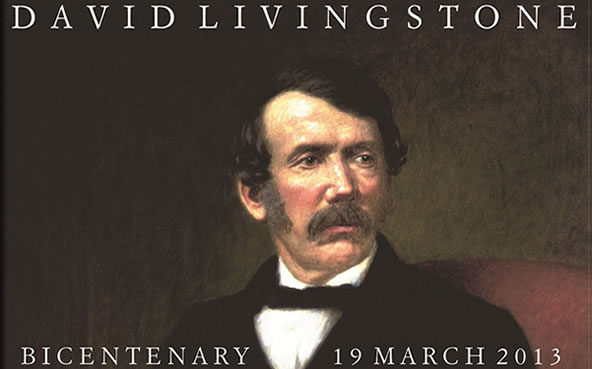
Just weeks prior, on March 19, was the bicentennial of another famous Scotsman, the missionary-explorer David Livingstone.

Click here for an instructive and inspirational 90-minute presentation by John Piper titled "He Kissed the Rose and Felt the Thorn: Living and Dying in the Morning of Life, Meditations on the Life of Robert Murray McCheyne." It was delivered at Desiring God's 2011 conference for pastors in Minneapolis.

Another minister who died young, the "uncommon Christian" James Brainerd Taylor (1801-1829), was often compared to R. M. McCheyne, David Brainerd (1718-1747), Henry Martyn (1781-1812) and other American, British and Scottish evangelists, missionaries and pastors who died young in the 19th-century.
"[James Brainerd Taylor] was a man of exceptional piety, a Christian of the Henry Martyn and [Robert Murray] M'Cheyne type. With him love for Christ and the souls of men was a ruling passion."
--> John T. Duffield (1823–1901), Professor of Mathematics and Mechanics (1847-98), Princeton University, and longtime advisor to and historian of the student-led and James Brainerd Taylor-founded Philadelphian Society of Nassau Hall (est. 1825, continues today as the Princeton Evangelical Fellowship). Among other works, Duffield is the editor of The Princeton Pulpit (1852), a collection of 15 sermons by some of Princeton Theological Seminary's faculty and staff, including Archibald Alexander, Charles Hodge and Samuel Miller.
Be blessed as you learn more about this Scottish divine and originator of the "McCheyne Bible Reading Plan" (whereby one can read through the Old Testament once, and the New Testament and Psalms twice, all in one year).
"Learn much of the Lord Jesus. For every look at yourself take ten looks at Christ. He is altogether lovely. . . . Live much in the smiles of God. Bask in his beams. Feel his all-seeing eye settled on you in love. And repose in his almighty arms."
--> R.M. McCheyne

To visit, click here.

Wednesday, May 1, 2013

Fellowship of Independent Reformed Evangelicals (F.I.R.E.) . . . national conference, Seattle, May 20-22, 2013

Fellowship of Independent Reformed Evangelicals.
Est. 2000.
"Every Spiritual Blessing" (Eph. 1:3) is the theme for the 2013 national conference of the Fellowship of Independent Reformed Evangelicals (F.I.R.E., est. 2000).

Along with four pastors, Carl Trueman, author and Professor of Historical Theology and Church History at Westminster Theological Seminary near Philadelphia, is a plenary speaker.

This year's conference is being held May 20-22, 2013, near Seattle, at Northwest University in Kirkland, Washington. Come and bless us with your presence! (Last year's conference was held in Louisiana.)

Uncommon Christian Ministries has been a member of F.I.R.E. since 2011, having been active in a F.I.R.E. ministry (Voice in the Wilderness) in Jerusalem, Israel, August 2009 to July 2011.

F.I.R.E. "is a unifying network for independent Reformed (and Reforming) baptistic churches to experience mutual edification, fellowship, cooperation and prayerful support in ministries and missions. There is no membership fee. Each project is initiated and overseen by a local church. Other churches may be invited to participate by sharing their time or resources. The success of the network is dependent on the committed involvement of the members."

The ecclesiastical fellowship adheres to the Second London Baptist Confession of Faith 1689 and the London Baptist Confession of Faith 1644. And affirms the Five Solas of the Protestant Reformation:

    Sola Scriptura - Scripture Alone
    Sola Fide - Faith Alone
    Soli Deo Gloria - the Glory of God Alone
    Solus Christus - Christ Alone
    Sola Gratia - Grace Alone

Here is a 5-minute introductory video on F.I.R.E. It is from the May 2008 national conference in Mount Hermon, California. Be blessed!


Saturday, March 23, 2013

"Justification and Regeneration" by Charles Leiter (Foreword by Paul Washer) . . . 4th annual Fellowship Conference in Denton, Texas, March 28-31, 2013

Available here.
A good introductory book to two essential Christian doctrines is Charles Leiter's Justification and Regeneration, 2nd Expanded Edition (Hannibal, Missouri: Granted Minstries Press, 2009). The Foreword is written by Paul Washer, founder of HeartCry Missionary Society.

The 192-page book is available in print or as an e-book. Though more expensive, it is also available at Amazon.com. However, a free PDF copy is available here.

Charles Leiter
Since 1974, Leiter has served as co-pastor of the non-denominational Lake Road Chapel in Kirksville, Missouri. Prior to being led into full-time vocational ministry, he studied physics and mathematics. He has been a conference speaker in the United States, Eastern Europe and South America (click here for some of his sermons).

Leiter is also the author of The Law of Christ (Granted Ministries Press, 2012, print copy or e-book). The Foreword is also written by Paul Washer.

The publisher provides this helpful summary of Justification and Regeneration:
The aim of this work is clear: "This book attempts to set forth in clear Biblical light the nature and characteristics of justification and regeneration, that God may be glorified and His children brought to know more fully the liberty that is theirs in Christ."
To achieve this end, Pastor Leiter first sets forth man's greatest problem, sin. Specifically, man has a "bad record" because he has sinned, but also a "bad heart" because he is by nature a sinner and can do nothing but sin.
But the glorious news of the gospel is that Christ has dealt with both our bad record and our bad heart. The bad record has been taken away because Christ died for our sins, and on that basis God has "justified" us, which means He has declared us righteous. As for the bad heart, this is destroyed when God "regenerates" us; God changes our hearts so that we begin to forsake sin and pursue true righteousness.
This book is deep enough for the seasoned theologian but simple enough for the brand new Christian, and it will yield its rewards whether you study it in-depth or read it devotionally. Many have used it for small group Bible studies, and unbelievers interested in Christ and willing to read a book will find the gospel fully explained here.
We have seen this book help so many people in various ways. For some, it shows the difference between biblical Christianity and the shallow, powerless "gospel" often preached today. Others have found new confidence and weaponry putting sin to death in their own lives. In the very least, all who read it gain a fuller vision of the salvation accomplished for us by Christ.
In our view this is a book that deserves the rank of "Christian classic."
Here is an insightful review of Justification and Regeneration by Ryan Fullerton, lead pastor of Immanuel Baptist Church in Louisville, Kentucky. In the review are also links to other reviews.

Fellowship Conference

Leiter and Lake Road Chapel are co-sponsors of the annual Fellowship Conference in Denton, Texas, held on the grounds of Camp Copass along the shore of Lewisville Lake. Leiter is one of the speakers, as is Ryan Fullerton.

2013 is the 4th annual conference. This year's theme is "Love to God and Love to Men." Uncommon Christian Ministries will be attending for the first time this year. Come join us and blessed us with your presence!

For info., see here.

Friday, March 1, 2013

David Livingstone, uncommon Christian missionary-explorer . . . 200th anniversary of his birth, March 19, 2013 . . . events and exhibits in Africa, U.K., USA, Canada


“I have found that I have no unusual endowments of intellect, but I this day resolved that I would be an
uncommon Christian.”


So wrote a young David Livingstone (1813–1873) prior to his initial departure for Africa.

Though not widely known today, the inspiration behind Livingstone’s resolution is James Brainerd Taylor (1801–1829). The Princeton University and Yale Seminary-educated evangelist in the Second Great Awakening was a household name in mid-19th-century America and Great Britain.

As learned from the Memoir of James Brainerd Taylor (1833), Taylor defined an "uncommon Christian" as one who is an “eminently holy, self-denying, cross-bearing, Bible, everyday” Christian.

Probably the most widely known person who was influenced and inspired by Taylor’s Uncommon Christianity was Livingstone.

Henry Morton Stanley: "Dr. Livingstone, I presume?"
David Livingstone: “Yes, and I feel thankful that
I am here to welcome you.”
November 10, 1871     Ujiji, Tanzania, Africa
Presumably in a diary entry, the famed Scottish pioneer missionary-explorer to Africa wrote (and as quoted above),
I have found that I have no unusual endowments of intellect, but I this day resolved that I would be an uncommon Christian.
Elsewhere, in a May 5, 1839, letter to his younger sister Janet, it is clearly known that Livingstone read and was influenced by the Memoir of James Brainerd Taylor.

James Brainerd Taylor
1801-1829
At the time of writing, the memoir’s popularity was at its peak in the U.S. and U.K. (a London edition appeared in 1834 by the publisher Westley and David), and the 26-year-old Livingstone was 19 months shy of leaving for Africa.

In the U.S. in the mid-1800s, Taylor's memoir was the 5th most printed memoir by the largest Christian publisher at the time, the American Tract Society. Jonathan Edwards' biography on Taylor's cousin, David Brainerd (1718-1747), was the 2nd most printed memoir by ATS.

In the letter—which is housed at the National Library of Scotland’s John Murray Archive in Edinburgh—Livingstone makes reference to “Mr. J. B. Taylor” and “uncommon Christians” (with “uncommon” underlined for emphasis). He then cites the American evangelist almost verbatim.

At the time, the London Missionary Society (est. 1795) candidate Livingstone was studying theology under a pastor in Ongar, England. And his sister was a teacher in their native Blantyre, Scotland.

Livingstone quotes from a May 11, 1823, letter that Taylor wrote while a student at New Jersey’s Lawrenceville Academy.

John Murray Archive.
National Library of Scotland.
In the letter, the 22-year-old Lawrentian quotes from his own journal entry that describes his dramatic “second conversion” (assurance of salvation) experience in Haddam, Connecticut, on April 23, 1822.
--> See John Holt Rice (1777-1831) and Benjamin Holt Rice (1782-1856), Memoir of James Brainerd Taylor, 2nd Ed. (New York: American Tract Society, 1833), 82-90. Memoir available online at Google Books and Archive.org.

Quoting the entire section for the sake of context, Livingstone states to his “dear sister,”
“The hand of the diligent maketh rich.” [Proverbs 10:4.]
This is true not only with respect to the things of this world, but also in reference to that, the possession of which is of far more consequence then all the other good things in the whole universe: the attainment of holiness, eminent holiness. We have the highest inducement to diligence in seeking this.
“They who hunger and thirst after righteousness shall be filled.” [Matthew 5:6.]
"Pray without ceasing.” [1 Thessalonians 5:17.]
And, “Whatsoever we ask” the Father in Christ’s name, “believing, we shall receive.” [Matthew 21:22.]
Let us ask perseveringly, earnestly, and with a determination never to rest content till we have attained, what Mr. J. B. Taylor used to term, the state of being uncommon Christians, that is, “eminently holy and devoted servants of the Most High" [James Brainerd Taylor, quotation marks not in the original].
Let us seek—and with the conviction that we cannot do without it—“that all selfishness be extirpated, pride banished, unbelief vanish[ed] from the mind, every idol dethroned, and everything hostile to holiness and opposed to the divine will crucified; that ‘holiness to the Lord’ may be engraved on the heart [Exodus 28:36, 39:30], and evermore characterize our whole conduct” [James Brainerd Taylor, quotation marks not in the original]. This is what we ought to strive after; this is the way to be happy; this is what our Savior loves: entire surrender of the heart.
May He enable us by His Spirit to persevere till we attain it. All comes from Him, the disposition to ask as much as the blessing itself. “Every good gift,” every grace “comes from the Father of lights” [James 1:17]. Let us bless him if he has given any desire after him and his Savior, and take it as a pledge of better things to come.
We must not rest satisfied with desires, never draw any comfort from our feelings. But only be content with the blessings themselves when conscious of resting on the Lord Jesus. Never look within but constantly away from ourselves to the blessed cure for our maladies, which is ever open and always free. 
Livingstone Cottages.
(Formerly called Chapel Cottages.)
Ongar, Essex, England.
This is where Livingstone penned
his May 5, 1839, letter.

Livingstone Cottages.
Ongar, Essex, England.


In one of the first exhaustive biographies on Livingstone, William Garden Blaikie quotes from a portion (approximately one-fifth) of the above May 5, 1839, letter by Livingstone. With a massive amount of Livingstone manuscripts at his disposal, the professor at New College, Edinburgh, no doubt had to be selective regarding what to include, and what not to include, in his 500-plus page volume.

In The Personal Life of David Livingstone (New York: Revell, 1880, free online copy here), Blaikie omits “Mr. J. B. Taylor,” maybe with the thought that the specific human source of Livingstone’s “uncommon Christians” remark is inconsequential.

And because Livingstone himself does not use quotation marks, the Scottish biographer is understandably unaware that Livingstone is actually citing “Mr. J. B. Taylor” in the section of the 1839 letter that he does include. Blaikie (1820-1899) simply writes, “Alluding to the remark of a friend that they should seek to be ‘uncommon Christians, that is, eminently holy and devoted servants of the Most High. . .’” (page 46).

The impression is given that the anonymous friend is a contemporary of Livingstone, possibly a friend (perhaps good friend D. G. Watt), fellow ministerial apprentice, or even his pastor-mentor, the Rev. Richard Cecil. And that the section “all selfishness be extirpated, pride banished, unbelief vanish[ed] from the mind, every idol dethroned,” etc., and expansion of what it means to be an “uncommon Christian” (“eminently holy and devoted servants of the Most High”), are Livingstone’s own words and not those of his anonymous “friend.”

Despite the omission of “Mr. J. B. Taylor” by Blaikie—and subsequently every Livingstone biographer since Blaikie’s hagiographical The Personal Life of David Livingstone—and despite the lack of quotation marks by Livingstone (and subsequently Blaikie and every Livingstone biographer since), that the anonymous “friend” is the “uncommon Christian” American evangelist James Brainerd Taylor (1801–1829), a.k.a. “Mr. J. B. Taylor,” can be deduced with certainty.

To visit, click here.
Bicentennial Events and Exihbits in Africa & U.K.

Here are 4 major online resources and events in honor of the 200th anniversary of David Livingstone's birth:

+ Livingstone200.org
Frontline Fellowship: Serving Persecuted Churches in Africa
Cape Town, South Africa
Dr. Peter Hammond, Founder & Director (est. 1982)
--> Frontline Fellowship USA branch (Manitou Springs, Colo.)

+ DavidLivingstone200.org
National Trust of Scotland, Scotland Malawi Partnership, the Scottish government, etc.

+ Livingstone2013.com
Livingstone, Zambia

+ Westminster Abbey Bicentenary Commemoration
London, England
March 19, 2013 (6:30 p.m.)
--> The ceremony is being attended by Livingstone and Moffat family members, church bodies, medical professionals, government officials, MPs and MSPs and many others with a deep regard for Livingstone and his legacy  . . . Livingstone's wife Mary (1821-1862) was the daughter of Robert and Mary Moffat, Scottish missionaries to Africa
--> Livingstone's grave and inscription

ALSO, see:

--> "Dr. Livingstone: A 200-year Legacy," BBC News, March 18, 2013

--> "Events mark birth date of explorer Dr David Livingstone," BBC News, March 19, 2013

--> "Celebrating David Livingstone, 'Africa's first freedom fighter': Born to mill-workers living in a single room in Blantyre near Glasgow 200 years ago, David Livingstone's life and legacy as an explorer and humanitarian is being celebrated across the UK and Africa," "The Scotland Blog," The Guardian (U.K.), March 19, 2013

--> "Meeting David Livingstone's Descendants," Scotsman.com (Edinburgh), March 20, 2013

To visit, click here.


Bicentennial Events in USA
(for Canada, scroll to very end)

While American commemorative events are understandably yet sadly few, Uncommon Christian Ministries (est. 2007) is presenting a paper/lecture at the following academic conferences and church. For a copy of the paper, contact UCM. 

“Resolved that I would be an uncommon Christian”:
The Influence of the “Uncommon Christian”
James Brainerd Taylor on David Livingstone

In Honor of the Bicentennial of Livingstone’s Birth (March 19, 2013) 
Pacific Northwest annual regional meeting
March 9, 2013 (3:00 p.m.)
Church For All Nations
Tacoma, WA

Pacific Northwest annual regional meeting
April 6, 2013 (10:45 a.m.)
Multnomah Biblical Seminary
Portland, OR

Biennial national spring meeting (and ASCH's 125th anniversary)
April 6, 2013 (4:00 p.m.)
Crowne Plaza Hotel Conference Center
Portland, OR

+ First Baptist Church
47th annual missions conference
May 14, 2013 (7:00 p.m.)
Marysville, WA

ALSO:
Evangelical Theological Society
Midwest annual regional meeting 
April 10, 2015 (11:00 a.m.)
Moody Bible Institute
Chicago, IL

Evangelical Theological Society
67th annual national meeting
November 19, 2015 (2:40 p.m.)
Atlanta Hilton Hotel
Atlanta, GA

Maybe see some of you in Marysville, Tacoma or Portland? Come and bless us with your presence!

If desiring a copy of the paper--or a more informal PowerPoint presentation at your church or meeting--contact UCM.
--> NOTE: The 139 PowerPoint slides are available here. They are borrowed from Dr. Peter Hammond of Frontline Fellowship, Cape Town, South Africa, and Frontline Fellowship USA.

Also, for a map created by Uncommon Christian Ministries entitled "The Global and Cross-Cultural Impact of the American Evangelist James Brainerd Taylor (1801–1829) and His Two Memoirs (1833, 1838)," see here.

Livingstone's grave. (See here for text.)
Westminster Abbey. London.
Issue 56 (Vol. XVI, No. 4). 1997. Christian History.
To order, or to view the free online copy, see here.


To visit, click here.
"Dr. Livingstone attacked by a lion."

Birthplace of Livingstone. March 19, 1813.
David Livingstone Centre.
Blantyre, South Lanarkshire, Scotland.


To visit, click here.

"Imperial Obsessions: David Livingstone, Africa and world history: a life and legacy reconsidered."
Academic conference. April 19-21, 2013. Livingstone, Zambia.

To visit, click here.

Bicentennial Exhibit in Canada

"Dr. Livingstone, I Presume?"
& "David Livingstone: Magic Lantern Series" (in Belvedere Gallery)

March 19 - August 31, 2013

Castle Kilbride (1877, designated national historic site 1994)
Baden, Ontario

David Livingstone, a Waterloo resident and great-great-grandson of John Livingstone (1811-1899, older brother to the famed David Livingstone), donated artifacts to the exhibit, as did the Museum of Health Care Kingston, Stratford-Perth Archives and Waterloo Region Museum.


Of this lone Canadian exhibit, see:

+ "Dr. Livingstone, I Presume - in Baden: Exhibit shows location connection to explorer David Livingstone," The Record (Kitchener, Ont.), March 10, 2013

+ "Dr. Livingstone, I Presume?", Waterloo Chronicler, March 13, 2013

+ "Exhibit shows Waterloo connection to explorer David Livingstone," MetroNews.ca, March 11, 2013

Canada

David Livingstone.
Waterloo, Ontario, Canada.
March 2013.

Great-great-grandson of John Livingstone (1811-1899),
Canadian immigrant and older brother

of the famed David Livingstone.

Photo by Brent Davis. The Record. Kitchener, Ont.
Canada

John Livingstone (1811-1899).

Older brother of David Livingstone.
Pictured with his grandson.

Immigrated to Ontario, Canada, in 1840.

Lived in Lanark County in eastern Ontario, 1840-60.

Listowel, Perth County in southwestern Ontario, 1860-99.

Buried in Fairview Cemetery in Listowel, Ontario.

Canada

Northwest face of Thunder Mountain in the Livingstone Range,
a sub-range of the Canadian Rockies in southeastern Alberta, Canada.


The range was named after David Livingstone in 1858 by Thomas Blakiston (1832-1891),
an assistant to the Irish-born geographer and explorer John Palliser (1817-1887).
When British-born "Forgotten Explorer" Peter Fidler (1769-1822) climbed Thunder Mountain

in 1792, he became the first European to make a recorded ascent in the Canadian Rockies.

There exists a Mount Livingstone in both Alberta (7,948 feet [2,422 meters])
and British Columbia (10,150 feet [3,094 meters], so named in 1927).

Adjacent to B.C.'s Mount Livingstone is Mount Stanley (10,138 feet [3090 meters]),
named after Henry Morton Stanley (1841-1904), the New York Herald journalist
of "Dr. Livingstone, I presume?" fame.


Friday, February 1, 2013

Synchronized Sunday school or Bible study resources for all ages . . . Answers Bible Curriculum + The Gospel Project

Two newly published and highly recommended resources for Sunday School or Bible study are Answers Bible Curriculum and The Gospel Project.

Both are 3-year study programs that unify an entire church by teaching the story line of the Bible (the grand narrative of Scripture)--from Genesis to Revelation--in an age appropriate manner. So all age groups are studying the same material but in a way that is at their intellectual and emotional maturity level.

Answers Bible Curriculum
Answers Bible Curriculum was created by the apologetics (Christianity-defending) ministry Answers in Genesis (est. 1994).

With the Australian Ken Ham as co-founder and president, AIG holds to Young Earth creationism and a literal interpretation of the Old Testament book of Genesis. Therefore, and as the AIG Statement of Faith asserts, "Scripture teaches a recent origin for man and the whole creation, spanning approximately 4,000 years from creation to Christ" (i.e., the earth is approximately 6,000 years old). And, "The days in Genesis do not correspond to geologic ages, but are six [6] consecutive twenty-four [24] hour days of creation."

Located in Kentucky but on the Kentucky/Ohio border (just west of the Cincinnati airport), the state-of-the-art, $27 million Creation Museum (est. 2007) is part of AIG.

Here is a summary of AIG's Answers Bible Curriculum, a curriculum that is in its first year of use at the church I am currently serving and teaching Sunday school at, First Baptist Church of Marysville, Washington:
Answers Bible Curriculum is a full-featured, chronological, 3-year Sunday school program. (12 quarters with 13 weeks per quarter. But could be 4-year curriculum if a church breaks for the summer.)
Its 156 lessons--35-75 minutes each--are synchronized across 7 age groups: Pre-K & Kindergarten, Grades 1-2, 3-4, 5-6, Junior High, High School and Adults.
Each group covers Genesis through Revelation and learns the same material—but at different levels of depth—empowering exciting and easy discussion for the entire family. The first 2 years cover the Old Testament, and the third year surveys the New Testament.
In response to the startling findings of numerous studies, Answers Bible Curriculum is designed to stem the tide of skepticism toward God’s Word that begins in grade school. That skepticism turns to disbelief, and causes over two-thirds of young people to abandon church by the time they graduate.
No other Sunday school program so thoroughly equips believers to defend the truth of the Bible! And because all ages cover the same basic material at the same time, parents can easily discuss it with their children—and add insights from their own learning. Fun and easy-to-use, this curriculum lays the foundation for life!
The purpose of Answers Bible Curriculum is (1) to present the gospel, beginning in Genesis, to all generations; (2) to train believers to know, obey, and defend God’s Word; and (3) to encourage believers to become conformed to the image of Christ.
This cutting-edge new curriculum was written with the following principles integrated throughout the lessons:
+ We can trust all of God’s Word beginning in Genesis
+ The Bible presents true history
+ God’s plan of redemption is woven throughout Scripture
+ God’s attributes are displayed throughout the Bible
+ We must carefully and accurately interpret the Bible
+ We must be ready to give an answer for what we believe
+ We are to live in light of what the Bible teaches

The Gospel Project

Concerning the equally instructive and multi-generational Gospel Project, it was created by LifeWay Christian Resources (est. 1891), the publishing and retail arm of the Southern Baptist Convention.

Here is how LifeWay describes the content of the 3-year curriculum:

The Bible is not a collection of stories. It is one story, the story of God’s plan to rescue His people from sin and death. It is the story of redemption, the gospel message of Jesus Christ. And it’s our story, too.
The Gospel Project is a Bible study resource that invites Adults, Students, and Kids of all ages to dive deeply into God’s story of redemption through Jesus Christ. In every lesson, participants are immersed in the gospel and learn how when the gospel works on them, they become a part of the story, too, the very hands and feet in God’s gospel project.
Led by General Editor Ed Stetzer and Managing Editor Trevin Wax, The Gospel Project is designed to unify an entire church under a single Christ-centered curriculum. Separate study plans for adults, students, and kids ensure the proper focus and depth for each age group.
Churches cannot go wrong using either of these two fine Bible study resources, either for Sunday school or small group studies.

Again, both 3-year, synchronized study programs are highly recommended as they lead students of all ages back to Bible basics--and therefore to the truth and excitement of the Gospel ("good news") presented therein.